Saturday, March 24, 2012

Doctor Who #123: The Savages Part 4

"And if ever you need the benefit of my wisdom again, I trust and hope you will allow me to express myself with my own free will, rather than place me in an oven, and try and cook it out of me."TECHNICAL SPECS: Except for some tiny clips shot on film from a television screen, no video exists of this episode. I have, as usual, used a reconstruction (Part 1, Part 2). First aired Jun.18 1966.

IN THIS ONE... With the help of a Doctorized Jano, the Doctor destroys the city dwellers' means of exploiting the savages, and Steven stays behind to help the planet's two populations reconcile.

REVIEW: As they dragged him, zombie-like, through corridors and patches of wasteland, I thought for a second there that Hartnell would be denied yet another performance on his own show. Thankfully, the Doctor wakes up from his daze sooner than later and gets back to the things he's really good at doing - thinking ahead, taking a moral stand, and saying goodbye to companions. There's quite a bit of action in the episode, mostly thanks to Steven's handiness with a light gun (completely at odds with how he handled himself in The Gunfighters), but without video, those sequences come off as terrible noise. Somehow, I don't think they were that spectacular on screen either. Still, it keeps Steven on the front line, and makes him a character to be admired by the savages.

The real focus of the episode is on the Doctor turning Jano so the Elder can put a stop to his culture's exploitation of another. It seems that the transference process has given Jano some of the Doctor's morality (a relatively recent development for him, you could argue), and can't now allow it to continue. The fact that the Doctor and Jano have the same idea on how to resolve matters may confirm my theory that some telepathic link was at work between the two men. The Doctor claims to know this was going to happen, so unless he's lying (see Rule #1), we have to entertain the possibility that he was mentally active during the incident, unlocking something in Jano's brain. The scientist Sento appears completely amoral, buying into the vicious circle that the Savages are incapable of development so should be used as a resource, while that use prevents them from developing in the first place. But there's hope for the culture in the person of Exorse who, after a struggle with his loyalties, chooses to side with the Savages, finally convinced by Nanina's compassion. In other words, it's possible for these two societies to come together, and not just because the Doctor's blown up their lab. (It's a small world when the one lab has the means to drain the entire Savage population of its vitality.)

It's not a bad story for Steven to go out on, and we're lucky that a number of the brief clips we have are from his departure scene. Small moments, like Dodo running to him, or the Doctor's proud handshake, Steven's look back before he leaves the room to become mediator. It's just about touching. The Doctor seems to push him into this destiny, much like he did with Susan (see Theories), but he 's no less sad about it. In comforting Dodo, he tells her that they mustn't look back, which has really become the Doctor's credo. An important line, that. Is it a satisfying end for Steven? Not entirely. They did set up his attraction to the future city and then his charisma with the Savages, so he CAN be seen as a man of two worlds. But is he the best man for the job? Rocket jock becomes diplomat? It's more like the Doctor's passed the buck, and though treaties can take a long time to forge, couldn't the Doctor and Dodo have stuck around until it was done? But those are contrivances we have to expect in this kind of a program.

THEORIES: Can the Doctor sense his companions' role in the Web of Time? There's some evidence that the TARDIS has some of that sense, landing where it can pick up people, or where it can drop them off. But this isn't the first time the Doctor's actively decided to drop someone off when they had every intention of staying with him. Is it a matter of sensing what points in time are fixed or safe for people displaced in history to thrive? The Savages takes place in the far future, perhaps even in the billions A.D. range like The End of the World and New Earth, so there's little risk of Steven damaging the timeline. The Doctor may not see the future, but he can at least see that Steven can contribute to history and have a life worthy of him without risk to the the fabric of space-time. He nudges him out of the nest in case another opportunity doesn't present itself.

VERSIONS: There is of course a Target novelization of this story, but I am unaware of any substantial changes it might make.

REWATCHABILITY: Medium - The action bits don't do much except keep Steven present in this, his last episode. Noisy, but worthy.

STORY REWATCHABILITY: Medium - The Savages has a strong theme running through it, and of course, is important for Steven's departure. You'll sometimes get flashbacks to 100,000 B.C., but overall, a good Doctor vs. Utopia serial.

Friday, March 23, 2012

Doctor Who #122: The Savages Part 3

"Our ancestors were great artists. As time passes, we are less able to do such things. Most of our talents have been taken from us. Only our faith remains. And that they will never take."TECHNICAL SPECS: Missing from the archives, so a reconstruction had to be used (Part 1, Part 2). First aired Jun.11 1966.

IN THIS ONE... Jano gets infused with the Doctor's vitality... and personality! Meanwhile. Dodo and Steven follow the Savages into their caves.

REVIEW: With this episode, Jano becomes the first villain to officially lust after a Time Lord's body/power/immortality (I made the argument for the Toymaker, but it wasn't really spelled out). His plan backfires, and having received all of the Doctor's drained vitality, he becomes a man with a split personality, sometimes talking in the Doctor's voice (see Theories). Now, it would seem producer Innes Lloyd toyed with the idea of replacing the difficult Hartnell permanently with this plot device, though I'm not sure how serious that is. Imagine Frederick Jaeger as the 2nd Doctor, forced to do his hyperactive Hartnell impression for the next three years. It wouldn't have been fair to the actors involved, nor to the audience. When you think about it, regeneration is an awesome device, especially compared to the cheap tricks that seem to have been tested and rejected throughout this era.

With the Doctor out of the way (again!), Steven and Dodo get to drive the bulk of the episode, and for Steven at least, it's a return to form. He hasn't been this heroic for weeks (or on SBG time, days), defeating Exorse and stealing his light gun with ingenuity. His willfulness is so alien to the Savages who have been drained of all energy and imagination that they can't help but fold and follow him. I do wish they hadn't trotted out the old "they must be gods" cliché, but same difference. Dodo is less useful. That is to say she hovers somewhere between uselessness and liability.

The Savages do get to shine however, as we discover their caves are really ancient temples of amazing beauty, a sign that they were once a great people. The actors do a good job, even on audio, of portraying tangible fear and despair at their situation. They're all massively depressed after decades (centuries?) of forcible drainage. And yet, there's hope for them in the character of Nanina who manages to charm the otherwise brutish Exorse with her compassion. So they haven't been drained of all good qualities after all...

THEORIES: So how does the Doctor "possess" Jano in this story? Well, we know the process used drains intelligence and creativity as well as health and beauty, and Jano is obviously after the Doctor's massive intellect and potential for time travel. What he didn't contend with is perhaps the Doctor's low-level telepathy. By sharing the Doctor's bio-field, Jano may have created a connection there that allows the Doctor to interfere with his thought patterns. Or this may just be because he gave himself an overdose, and fact is, he could have absorbed the personality of a Savage if he had wanted. But I like my first theory better.

REWATCHABILITY: Medium - Good development on the Savages themselves, the return of a more heroic Steven (in the nick of time), and an intriguing personality switch make this one rise above its fairly standard tropes.

Movie Marquee Friday: Addendum Surprise

Rise up, people of History...
Count them all before you die...

The massacre of men, the counsel of women...

Cheesy scrapbooking tells the tale, the rest must be epilogue...

Fade in on deco reality...

Drawn for action around the world...

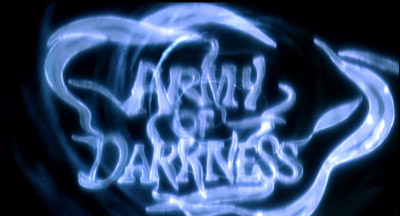
Ghostly tunnel wisps dead set against Bruce Campbell...

Bird full of Fu, crash zooming soon to Earth...

Thursday, March 22, 2012

Dial H for Half the Comic

Chris and Vicki's first full issue (and indeed, the first full issue of Dial H for Hero) is so full that I've got to break it down into individual stories. Twice the dials, twice the superheroes, after all. But since even the villains were created by readers, I think it's only fair to talk about them too, and see if they could be integrated into the DCU. Speaking of the DCU, if it was always a bit nebulous if Robby Reed lived on Earth-1, 2 or X, Chris and Vicki are evidently on Earth-1, with the Gordanians and Superman both getting a mention.

Case 19: Adventure Comics #479
Dial Holders: Chris and Vicki
Dial Type: Watch and Pendant Dials
Dialing: When one member of the duo uses their Dial, the other's starts glowing as a signal that their help might be needed. This story established a one-hour limit on each transformation, something Robby never had to contend with. Identities last only an hour, and Chris and Vicki must wait an hour before dialing a new one.
Name: Megaboy (not a bad name for a teen hero, though a little old school)
Created by: David Cason, age 11, from Lagrange, Georgia
Costume: Where it doesn't look purple, it looks pink, and it's hard to get behind the two elements that break up the full-body leotard, namely the odd crosshair on his torso, and the bucket helmet.
Powers: Megaboy can fire mega-blasts from his hand, so powerful they propel him through the air (there doesn't seem t be collateral damage). He also appears to be stronger and tougher than the average bear.
Sighted: Near Fairfax and at the Stoney Heaven Nuclear Plant. After fighting Flying Buttress, Megaboy helps him and G.L.U.N.K. recover their control cylinders from the clutches of a robot sentry.
Possibilities: One of Ma Hunkle's kids, all grown up? Forbush Man analog to piss off Marvel? Legionnaire with a fetish for Ferro Lad?
Integration Quotient: 15% (he's got potential, but would likely be laughed at by other heroes)
Name: Sunspot (a lawsuit in the making, if anyone cares about the New Mutants anyway)
Created by: Shawn Sherman from South Roxanna, Illinois
Costume: The most distinctive thing about Sunspot's look is that swish of blond hair seeming to stretch at an angle when she moves.
Powers: Sunspot can generate great heat from her body, enough to throw heat beams around or dry out vines holding her. She can also fly at incredible speeds, doing Maine-Florida in 15 minutes.
Sighted: Near Fairfax and the Everglades. After fighting Flying Buttress, Sunspot helps him and G.L.U.N.K. recover their control cylinders from the clutches of a robot sentry that can control plants.
Possibilities: I realize that if I like Sunspot at all, it's because I like Vicki, because there's really nothing to make her stand apart from other fire-powered characters. At best, a disposable Titan or Outsider.
Integration Quotient: 10% (too generic to be of much use)
Name: Ice (back then, Ice was known as Icemaiden)
Created by: Clifford Stroud, age 16, address unknown (admonished by a footnote for not including it)
Costume: The long black gloves, boots and cape give contrast to an Amazon-in-repose outfit. Ice is like a Nordic goddess on holiday.
Powers: Rather obviously, Ice can generate cold and ice. She can also fly, leaving a streak of ice on take-off.
Sighted: In Egypt. She fights a Gordanian robot disguised as a sphinx to get the last remaining control cylinder.
Possibilities: Now that a beloved DC character is called Ice, there's little reason for this copycat to be around. Maybe some time back in history? The Demon Knights might meet a Nordic princess, precursor to Tora.
Integration Quotient: 45% (up from 0% thanks to the historical idea)
Name: Color Commando (kind of silly, but alliteration works)
Created by: James McClernan, age 15, from New York City
Costume: The black and white elements make him a good visual partner for Ice, and I like the one black arm, but he's hardly as colorful as his name would imply. The rainbow glove, powder blue mask and disco collar are all eyesores. Even without the color, those gloves are hardly the same style! Like the Rainbow Raider, he may be color blind.
Powers: The Color Commando has a gun that converts light into offensive energy. Presumably, those grenades aren't just for show and he might have other tools in his bag. He never uses these in the story however.
Sighted: In Egypt. He fights the robot sphinx with Ice.
Possibilities: The kind of character some writers like to set in smaller towns or more international venues, just to pad out the DCU's superhuman population outside of the cities readers care about. But I bet we wouldn't see this guy much.
Integration Quotient: 10% (inherent silliness and lackluster powers mean he's not even good at providing local color)

Also featuring...
Name: Flying Buttress and G.L.U.N.K. (those are TERRIBLE names, just terrible! G.L.U.N.K., by the way, means Galactic Logistic Unit for Navigation and Knowledge)
Created by: Flying Buttress by Steve Matson, age 17, from Portland, Oregon; G.L.U.N.K. by Richard Morrissey, age 26, from Farmingham, Massachusetts
Costume: G.L.U.N.K. looks like a metallic pyramidal spaceship, while its servant Flying Buttress, a colorless silicon-based life-form, has a bulky belt that prevents him from ever picking up a dime on the street. He does wear Strata's boots though (see Possibilities).
Powers: G.L.U.N.K. appears to be a sentient ship. In addition to flying through space and doing other spaceshippy things, it is equipped with a freeze ray that keeps a unit of Earth soldiers at bay. The Flying Buttress is its servant and can fly, fire beams of energy, and is apparently immune to Megaboy's powers, but not the full force of Sunspot's. Despite all this, they require Chris and Vicki to do all the work (to my surprise, there's no double-cross).
Sighted: In space, G.L.U.N.K. fought the Gordanians, but was forced to come to Earth where the evil reptiles had secreted technology important to the survival of the ship's world (presumably, it was built by, and serves, an alien race). When they landed, they were noticed by the army and Buttress had to fight a resident superhero named Megaboy. They were sighted in the Everglades and Egypt as well, giving rides to other heroes.
Possibilities: Terrible names aside, G.L.U.N.K. must belong to someone, possibly in the Vegan system. You'd think you'd see it or another similar unit in Omega Men or something. Buttress could be from Dryad, like Strata and Blok, drawing a connection to yet another of DC's space books.
Integration Quotient: 80% (built-in connections makes it easy, but file off the names, please)

Next time, we'll look at the second half of the book, as actual villains show up in Fairfax.

Doctor Who #121: The Savages Part 2

"Do you not realise that all progress is based on exploitation?"TECHNICAL SPECS: Missing from the archives, so I've used a reconstruction (Part 1, Part 2). First aired Jun.4 1966.

IN THIS ONE... After he attempts to help a Savage, the city dwellers condemn the Doctor to having his life force drained.

REVIEW: As off-model as the main characters seem in this story, I've got to respect Ian Stuart Black's writing for actually making The Savages about something. Through my powers of hindsight, I can see how each of his stories (The War Machines and The Macra Terror, after this one) are about progress and exploitation. In a way, The Savages seems relevant to the 60s youth movement, except the ages are all reversed. The "young" society (the Savages) is mostly composed of old men, while the city, the more mature society, is youthful and energetic. Of course, the latter is sapping the former of its vitality, its talent, its intelligence and its beauty. Exploitation taken to its SF extreme. The Savages are unable to fight "the Man" because the Man has taken even their ability to fight.

Poor Dodo, the representative of Youth in the TARDIS crew, spends half the episode being told she's stupid and imagining things, her companions acting almost hypnotized by the city dwellers. Thankfully, the Doctor reveals he was faking it and doesn't really put his trust in this utopia, eventually showing outrage at the dark secret holding this society together, long before he realizes he's about to become its victim. So what's Steven's excuse? Well - spoilers! - he's leaving at the end of this story, so some disenchantment with his traveling companions isn't untoward, but perhaps it's more than that. Perhaps this future reminds him of his own. We can't know because we never saw Steven in his own environment. As disgruntled as he is with Dodo, it's still a harsh indicator of what the production team thinks of her character. "Not even Dodo would be as stupid as that!" So that's the characterization you're actively going for, eh?

Thinking on the ending, with the Doctor in a plexi box getting his vitality drained, gets me thinking Time Lords would make nearly limitless power sources. Their lives are so much longer, even before you force regeneration. Of course, none of that lore yet exists, and we'll see how the Doctor might have been replaced without regeneration ever having been invented in the next review...

REWATCHABILITY: Medium - Though you almost wonder one whose side Steven is on, Dodo isn't unresourceful and the Doctor actually gets to be doctorly (as opposed to Doctorish).

Wednesday, March 21, 2012

Because Sometimes I Just Want to Post a Picture of Groo Fighting a Two-Headed Giant

And yet, still only two brains in the panel.

(From Pacific's Groo the Wanderer #4 by the always great Sergio Aragonés.)

Doctor Who #120: The Savages Part 1

"They're very pleasant, yes they're both very pleasant. Apart from their juvenile exuberances, I'm sure you'll like them." (The first Doctor, on his companions.)TECHNICAL SPECS: This story is missing from the archives, though abundant telesnaps exist. I've listened to the soundtrack as narrated by Peter Purves, but for purposes of this review, I'll be using a reconstruction (Part 1, Part 2). First aired May 28 1966.

IN THIS ONE... The TARDIS lands in the far future, where an advanced society seems to be exploiting a more primitive one.

REVIEW: The previous episode ended on an ironic twist as the Doctor claimed to have landed in a far future age of prosperity while a savage right out of 100,000 B.C. appeared on the ignored scanner. The truth is, the setting contains both, the first time this trope is used in Doctor Who, but far from the last. The other first is that the Doctor is immediately recognized by the (advanced) natives. New Who has made us used to the Doctor as Legend, but here, it's very strange, even if their information is partial at best (companions? wha--?). These future people are basically Doctor Who fans, tracking his movements through time and space, and upon meeting him, lavish him with new clothes and his companions with bejeweled daggers (what). And the Doctor drinks it in, his innate arrogance making him easy prey for flatterers.

But if the Doctor's notoriety seems to have undergone a paradigm shift, it really isn't the only regular character who acts strangely. Steven has no reason, for example, to think Dodo's making up stories about cavegirls being led away by armed guards. He's always been one to question everything, but in this case, he's content to believe the city dwellers he just met and who are obviously hiding something. Dodo, usually jumping into danger like it's all a game, suddenly spends all her time screaming with the slightest of provocations (at least she goes off-tour). The disharmony between the companions also rings false, however Ian Stuart Black doesn't seem to be one for following the production bible, as will also be evidenced by the next story, The War Machines. But I'm getting ahead of myself.

Chris Barry directed this story, so it must look pretty good, though it's sometimes hard to say with the murky telesnaps that have survived. The sets seem impressive enough, though they're the usual Hartnell future stuff - lots of white, sterile walls and floors, with a strange sculpture here and there. That hallway set (above) isn't generic though, and the way the city dwellers talk about their home, it seems huge. The city is a utopia where ghoulishly, scientists drain the life force out of primitives to enhance their population's qualities. And yet, they still have guards bitching about their bosses. Far from classless then. Of the Savage way of life, we know very little, except that they live in fear of the city dwellers. Props to Clare Jenkins as Nanina whose pitiful whimpers make the life force draining process seem a fate worse than death.

THEORIES: If this is the far, far future, then it makes some measure of sense that they might know of the Doctor's travels and general interference in history (and it's ALL history to them). Obviously, these guys have the ability to peer into the vortex, so they might also be tracking other Time Lords for all we know. That seems their principle source of information, because had the Doctor been legendary at this point, they would at least have known his name. So why don't they? And why don't most future/alien societies treat the Doctor has a legend as often happens in the new series? Well, it's my belief that as the Doctor travels through time and space, he changes history, if only to place himself there. So when the Doctor visits the city in this episode, they've only been able to track his first incarnation's movements, and not the things yet to come. The Doctor is treated according to the notoriety he's accumulated from his perspective, not from some universal perspective. It's a paradox, what can I tell ya?

REWATCHABILITY: Medium - Though the characters are handled differently than they have before, the episode should be interesting to Who historians tracking the evolution of the program and its protagonist.