Showing posts with label Books. Show all posts

Wednesday, January 18, 2012

Three Weird Books

A meme of sorts, if you'd like to participate, consider yourself tagged (comments section or your own space). The idea is to look at your shelves and find the three strangest books you own. Obviously, it's all relative. Twilight would be a very strange thing to find on my shelves while a Klingon dictionary or Finnegan's Wake would not. I've also decided to omit graphic novels and role-playing manuals from this pool, though you don't have to. I just put them in another category entirely. So what are the three weirdest books in my library?

The Urantia Book
I found this blue brick of more than 2000 onion-skin pages in a used book store and it was so strange (and I'll admit, cheap), I just had to get it. It fits my collection of sacred texts (I like to keep books from every religion, alive and dead, on my shelves) and yet doesn't. Urantia is this faiths' name for Earth, and the book is part Christian, part Scientology. I might have used it as a sacred text found by player characters in one of my games, but never did (still, I'm not dead yet). The faith elements aren't too bizarre, though it tends towards a more scientific vernacular. The shard of God the Father that is in each of us, for example, is called the Thought Adjuster, and it helps each individual, and society, reach some kind of enlightenment over time. There are a great many pages also devoted to history and cosmogony, freely confirming the existence of aliens, and a proto-human race of blue, red, green, etc. people (we used to be into primary colors before we started mixing into beiges and browns). How the universes are constructed and their function, how mutations arise to create new species, it's all in there. There's also a section on the life of a mortal Jesus - the best example of this cosmogony and enlightenment at work - which is pretty much written as a novel. As eclectic a religion as you're likely to find, and I have a first edition!

Pop Poems
A literary experiment by Ronald Gross, Pop Poems attempt to take the philosophy behind pop art and apply it to text. The result is pretty awful. So for example, while pop art would take non-"high art" illustration like ads, stamps or comic strips and reproduce it in a high art context (in size, medium and/or location), Pop Poems takes non-literary writing and gives it a poetical "shape". Gross translates newspaper articles, instruction manuals, tax forms, legal texts, grocery lists, and of course, ads into sonnets, free verse and odes of all sorts. It only works occasionally, in the way an exquisite corpse might, but usually, it sounds exactly like the original text did no matter the type setting. Bonus points for turning the indicia and About the Author into extra poems.

Psychic Pets
This booklet was bought and given to me at the check-out aisle at a local market and for some reason, I've always kept it (and its cousin, How To Talk To Your Cat, but that one seems right now my alley). I guess it's mostly strange because of the psychedelic pink dog on the cover, but it's also full of weird stories we're supposed to take as Truth, about life-saving seagulls and the ghosts of pets back from the dead. I'm sure we can believe the sources. 1920s local newspapers were famous for fact-checking, right?

There might be something strange SOMEwhere in the house. It's hard to get to all the books at the Casa del Siskoid. But I think these are pretty good. So now it's your turn - What are YOUR three weirdest books?

Monday, January 2, 2012

The Siskoid Awards 2011

Welcome to the new year! That's right, it's time for our annual Geek Gala! Come in from the cold and the smelly red carpet (that's not its original color, guys) and have a seat!

Once again, I'm rewarding excellence in stuff I've seen, heard or read this year (regardless of when it was originally released). As usual, only newly experienced material will be up for consideration (or else I'd just watch BSG once a year and be done with it - then cause myself grievous harm, probably). For television episodes, no more than one per show can be put up for nomination. Other limits may apply. No money or prizes will actually be awarded. Thanks for not trying to collect.

Best Book of 2011 - The runners up are...
5. Chicks Dig Time Lords (Mad Norwegian)
4. Supergods (Grant Morrison)
3. Write More Good (Bureau Chiefs)
2. Manhood for Amateurs (Michael Chabon)
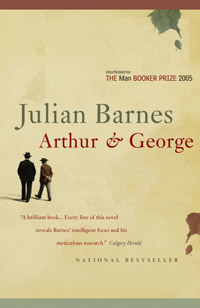
...and the Siskoid goes to: Arthur & George (Julian Barnes) - We're starting the new year with a Sherlock Holmes movie in theaters and a new series of Steven Moffat's Sherlock on tv, so it seems somehow appropriate to have Barnes' 2005 novel about Arthur Conan Doyle hit the top of the chart. Here's what I said about it last summer: "A wonderful novel, I think of interest to Sherlock Holmes fans. The novel is told from the points of view of both Arthur Conan Doyle and George Edalji, the half-Indian solicitor who was wrongfully convicted of the 'Great Wyrley Outrages', a series of animal mutilations in a rural area. The lives of both men are contrasted, Barnes using a different style for each (Doyle's is literary, while the simpler George is all present tense) and they in fact do not meet until late in the book. Awesomely researched, lightly comic and a real page turner when you get to the trial and Doyle's later investigations, Barnes produces here two superb character studies based on available sources. I haven't enjoyed one of his novels this much since, oh, my very first touch of Barnes (and I've nearly read them all), A History of the World in 10½ Chapters."

Best Comic of 2011 - The runners up are...
5. The Guild specials (Felicia Day and various artists and co-writers)
4. Infinite Vacation (Spencer and Ward)
3. Daredevil (Waid and Rivera)
2. Incredible Change-Bots Two (Jeffrey Brown)
...and the Siskoid goes to: Infinite Kung Fu (Kagan McLeod) - I was stoked to see it on other year's best lists on the Internet, and you should hear more about it from me and others in January if podcast plans work out like they should, but here's what I said in my capsule review: "Infinite Kung Fu is a 450-page trade collection of Kagan McLeod's incredibly entertaining martial arts comics series. McLeod re-imagines the "martial world" of his favorite kung fu movies as an amalgamated place where Shaolin monks are able to meet blaxploitation stars, a timeless place of action and zen Buddhism. It's also a magical world, where spirits return to dead bodies causing a zombie infestation of epic proportions, which the Eight Immortals have tasked the few students who haven't turned to the dark side (poison kung fu - an obvious wink to the Five Deadly Venoms) to stop. Wonderfully imaginative, McLeod's fluid, black&white, watercolor&ink art excels at showing the action both in large panoramas and in intimate play-by-play sequences between the good and evil masters. And throughout, winks and nods to great martial arts films from both sides of the world, there for those who can appreciate them. Get it direct from Top Shelf if you can't find it elsewhere!"

Best Film of 2011 - The runners up are...
5. The King's Speech (Tom Hooper)
4. The Social Network (David Fincher)
3. Hard Core Logo (Bruce McDonald)
2. JCVD (Mabrouk El Mechri)
...and the Siskoid goes to: Three Colors: Red (Krzysztof Kieslowski) - I (re)discovered Kieslowski's work this year and it's really wonderful. I knew one of his films was taking the prize, but it was difficult to choose which one. Ultimately, it's Red I was most impressed with, as it feels like a culmination of what he was doing in the early 90s, regrettably at the end of his life: "Rouge reunites Kieślowski with Irène Jacob, with whom he worked with on The Double Life of Veronique (the film that made her a star), and takes place in her native Geneva. She plays a storm-tossed, kind-hearted model who, through chance (and chance is a huge theme in Red), meets a bitter retired judge (Jean-Louis Trintignant) who spies on his neighbors and has a strange prescience. Through their stories we discover a thick web of coincidence and mirror images that makes this last part of the Three Colors trilogy the most mysterious and intriguing. If Blue was a subverted tragedy, and White a dark, dry comedy, Red is less easy to classify. To me, it is a fable, one of pure movie making, that uses images in a way that would, to most readers of this blog, be reminiscent of the way Moore and Gibbon do in Watchmen. The ironic intricacies of the film make it my favorite of the three. Irène Jacob simply breaks my heart in every frame."

Best TV Series of 2011 - The runners up are...
5. Doctor Who Series 6
4. How I Met Your Mother Season 1-6
3. Community Seasons 1-2
2. Coupling Series 1-4
...and the Siskoid goes to: Sarah Jane Adventures Season 4 - I'm as surprised as you are! It came in at the very end of the year and scooped a lot of excellent television (and I watched a LOT this year). Oh, I'll admit to still being a little weepy about it, but freshness aside, it did make me laugh, cry and miss Elisabeth Sladen terribly. Sarah was always the draw, but I think this is the season where the kids come into their own and become just as much a reason to keep watching. I don't think anything else I've seen this year deserves to be called a "perfect season".

Best TV Episode of 2011 - The runners up are...
5. Pilot (Alias Season 1)
4. Chuck vs. the Marriage Proposal (Chuck Season 4)
3. Split (Coupling Series 3)
2. The Girl Who Waited (Doctor Who Series 6)
...and the Siskoid goes to: Advanced Dungeons & Dragons (Community Season 2) - Another one that's very hard to call, but Siskoid's Blog of Geekery wouldn't be living up to its name if it didn't acknowledge the geekiest thing ever broadcast on network tv. It's a bottle show that doesn't attempt to represent the characters' imaginations in any way, but stays true to the spirit of tabletop role-playing (if not the letter of the rules... at least, I've never played it like that even if I consider myself a narrativist), pokes fun at it, but doesn't condescend to it, and at its heart, is about saving a person's life. Bonus points for using 1st edition AD&D books. It somehow makes people sitting around a table talking EPIC. And isn't that a true RPG experience? Bonus bonus points for taking Pierce down the darkest of paths. Anybody want to save this series from extinction yet?

Best CD of 2011 - The runners up are...
5. Year of the Pig (Big Finish's Matthew Sweet)
4. Son of the Dragon (Big Finish's Steve Lyons)
3. The Girl Who Never Was (Big Finish's Alan Barnes)
2. Doctor Who Series 5 soundtrack (Murray Gold)
...and the Siskoid goes to: Roses are Red, Violets are Blue (Trocadero) - I never imagined an album of music inspired (and used) by a web series based on a video game would become my most listened-to album of the year, but there it is. Trocadero did all the music for Red vs. Blue, the comedy web series based in the Halo universe, and their Tex-Blues sound is perfect for the dusty isolated melancholy of Blood Gulch, but the music isn't a slave to the RvB story. Though Blood Gulch Blues and A Girl Named Tex have obvious links to it, all the songs stand on their own and aren't "jokey" despite having a certain wry humor. Great driving music too. Get into my Warthog and let's go!

Stupidest Move in the Geekaverse 2011 - The runners up are...
5. Dalek Car for toddlers! (Zappies)
4. Rob Liefeld slags off Stan Lee (Rob)
3. Bookstores yanking DC trades off the shelves because of a Kindle deal (Barnes & Nobles)
2. Wonder Woman is Ally McBeal (David E. Kelley)
...and the Siskoid goes to: Flushpoint! - Has there ever been a more ill-conceived and mismanaged move by a comic book company than the New52 "don't call it a reboot" reboot? Don't misunderstand me, there are some excellent books in the New 52, but almost all of them would have worked in the original universe. Last September, DC threw out the baby with the bathwater in the hopes of getting into an untapped reader pool that I doubt has materialized by using the same old writers and artists, and even regressing to some kind of 90s Image/Marvel mentality of splashy art, less story, antiheroes and terrible designs. (Putting Liefeld on a monthly book ALONE would rate a spot on this list.) Too early to tell if they got new readers out of it, but I know they lost some with their "jumping on/off point". Fan outrage over the loss of Oracle, overt sexism in Red Hood, Catwoman and Voodoo, and the renumbering of flagship titles like Action and Detective (when I got into comics, these were in the late 400s and didn't scare me away) have generated a lot of bad publicity, and DC's hope that readers could try so many titles in a single month (much less support them monthly) when they're offering fewer pages for the same money and same-price digital will likely cause an implosion like that of the 70s. That's sure to piss off fans of the books not pulling their weight, not because they're bad, but because they were thrown into too big a pond killer brand recognition sharks. The decision to reboot continues to be unjustifiable, seeing as DC's last event books (Brightest Day and Gen Lost) had made promises that could never be made good on, and the recent release of some Batman Inc. issues as a non-continuity special shows how little planning went into it. And then there's the whole communication snafu, which I've promised to write a proper article about (for once, commenting on something that is actually my field), but which includes creators/editors making censurable comments (like DiDio's public reaction to people criticizing the lack of female creators on the new books) and the appearance of corruption in the way Johns and Lee have profited from the change, as opposed to other creators. But I've gone on too long. No matter what good comes from the New 52 initiative - and there will always be some good comics at DC - it will always stand out as one of the worst handled moves in comic book history.

What would YOUR picks look like? Tomorrow: The Technical Achievement Awards as given in a ceremony prior to this one!

Saturday, July 9, 2011

Cat of the Geek #119: Eureka

Name: Eureka
Stomping Grounds: Dorothy's kitten in various Oz books
Side: Good
Breed: American longhair
Cat Powers: White fur that tends to look other colors, usually pink or purple. Keeps her cool even when falsely accused. The ability to get to Oz without explanation.
Skills: Eat 7, Sleep 6, Mischief 9, Wit 8, Making fanwankers out of post-Baum Oz writers 7
Cat Weaknesses: Dishonesty. May or may not enjoy killing piglets. A sucker for a good show trial.

Saturday, June 18, 2011

Cat of the Geek #116: Mycroft

Name: Mycroft AKA Big Mike
Stomping Grounds: Garrison Allen's series of Cat Detective novels
Side: Good
Breed: Abyssinian
Cat Powers: Scores fairly high on the Murder She Wrote-meter for calculating likelihood a murder will occur wherever you go. Lassie-level communication skills.
Skills: Eat 3, Sleep 3, Mischief 4, Wit 6, Detection 8
Cat Weaknesses: Always gets credit taken away by his human Penelope Warren.

Wednesday, July 14, 2010

Cat of the Geek #70: Cats of Ulthar

Names: Unknown
Stomping Grounds: The eponymous story by H.P. Lovecraft, as well as his The Dream Quest of Unknown Kadath
Side: Good(ish)
Breed: Abyssinians
Cat Powers: In Ulthar no man may kill a cat, under penalty of cats eating everyone in the city during the night.
Skills: Eat 10, Sleep 3, Mischief 7, Wit 5, I Can Haz Your Soul 10
Cat Weaknesses: Deeply unforgiving (as Lovecraft says of cats, "[she] remember that which she hath forgotten".)

Wednesday, June 30, 2010

Cat of the Geek #68: Whiskers

Name: Whiskers, as always
Stomping Grounds: Jhary-a-conel/Jaspar Colinadous/Jerry Cornelius' familiar in some of Michael Moorcocks' Eternal Champion series
Side: Good
Breed: Winged shorthair
Cat Powers: A house cat with wings is a potentially terrifying idea. Exists in multiple iterations. Vampiric powers. Enigmatic.
Skills: Eat 6, Sleep 5, Mischief 5, Wit 6, Spy 8
Cat Weaknesses: Enigmatic AS HELL!

Wednesday, March 24, 2010

Cat of the Geek #54: The Cat in the Hat

Name: The Cat in the Hat
Stomping Grounds: Six of Dr. Seuss' books
Side: Chaos
Breed: Tuxedo Cat
Cat Powers: Dimensionally transcendental hat. Magical clean-up. Disappear without a trace. Amazing equilibrium.
Skills: Eat 5, Sleep 1, Mischief 10, Wit 7, Detect latchkey kids across space and time 8
Cat Weaknesses: Mike Meyers.
Bonus muppet version:

Wednesday, March 17, 2010

Cat of the Geek #53: Jeoffrey

Name: Jeoffrey
Stomping Grounds: "For My Cat Jeoffrey" by Christopher Smart
Side: Good
Breed: European Shorthair
Cat Powers: Worship God by doing catly things. Statically charged fur. More tricks than your regular house cat.
Skills: Eat 6, Sleep 8, Mischief 2, Wit 3, Fetch 5
Cat Weaknesses: Misers and hypocrites. Cork. Rat bites.
Full Text with images by L. Nichols

Sunday, February 21, 2010

This Week in Geek (15-21/02/10)

Buys

A couple more films to add to my Asian cinema collection. There's Dragon Tiger Gate. Because Donnie Yen, that's why. It's all I ever need, really. And "The Godfather with a Hing Kong flavor!" (oh quotes from critics about Asian films, will you never learn?) Triad Election. Replace Donnie Yen with Simon Yam in the previous reasoning and you've got an accurate idea of my frame of mind.

"Accomplishments"

DVDs: Fell sick in the middle of Murder Week (PURRRR-FECT! GRRRR!), so I crashed on the couch, slept some, but also got through Hustle Series 3. If the quality of stories went up between 1 and 2, it stayed more or less the same from 2 to 3. Which isn't a bad thing. 2 and3 might as well be the same "season". Perhaps a little less kick in its series premiere than 2 or even 1, but the rest is quite good. More fantasy bits - silent film, Bollywood - and that's welcome. The DVD also includes 18 minutes of bubbly interviews with the cast. Fun, if largely insubstantial. I do wish these DVDs had more to offer in the way of extras (or as I said last week, subtitles).

Big Finish Doctor Who audios: Robert Ross' Pier Pressure is an odd little audio play that, I suppose, is more interesting to those who Max Miller is. The Brighton comedy legend is no one to a North American like me (Roy Hudd is apparently famous for impersonating him). Wiki further informs me that the young actor called Billy who gets a scene in the play is meant to be William Hartnell. Again, lost on me. But the reason I find it odd is that it's initially far more concerned with the 1930s entertainment scene than it is with its evil god possession plot, so much so that I kept expecting the whole thing to be a hoax. Though the audios let you imagine practically any visual, Pier Pressure is the equivalent of a cheap episode. Everything seems hokey and melodramatic, so my imagination couldn't conjure up more than cheap sets and effects. Enjoyable, with some clever dialogue, but I doubt I'll remember it in a few weeks time.

Time Works by Steve Lyons has a great idea behind it - a world where time is a religion, and the clockwork men work between seconds to keep everyone in check. There's a fun bit about Charley and C'rizz trying to prevent the 8th Doctor from being killed while they're trapped in a moment in time, and the clock vocabulary of the citizenry is quite clever. One of the best 8th Doc audios in a while, I dare say.

Books: The first book I ever edited just came out last Friday. It's not gonna be of any interest to readers of this blog, of course, but I'm extremely proud of the author, the oft-named Carolynn, and her History of the student federation I work for. I had first edit on this 150-page page turner (no really, it's extremely compelling to people who've studied in Moncton over the last 40 years, the history really does come alive, I'm not just spouting clichés), and the cover is based on a quick design I did, though a professional graphic designer put it together better than I could for the final. The first of many publications for Carolynn, but as for me, it kinda gave me the "bug". I wanted to be an editor at one point, but never really pursued it. But I think it's something I'd like to do some day. Or write. The experience certainly taught me about the process, from research to finished product, and that it's doable. Soon as I quit my job, soon as I quit my job...

Hyperion to a Satyr entries this week include:
Act I Scene 3 according to the BBC (Derek Jacobi)

Wednesday, February 25, 2009

25 Writers

The other day, my blog-friend Michael May listed 25 writers that had influenced him, apparently as part of a meme on this newfangled contraption the kids like to ride today called the Facebook. I promised I would participate and list my own, and well, it took a while, but here it is.

I think part of the problem for me was determining just what "influence" meant. After all, am I not influenced by everyone I meet, everything I see, hear and read, everything that happens to me? And just how am I influenced? As a writer? If you somehow made a complete works of Siskoid, you'd find (in addition to these bloggly articles): a few zines and mini-comics, some literary essays I'm proud of, terrible poetry, unpublished scripts for various comics projects, role-playing scenarios, newspaper pieces, lots of articles about improv and CCGs, press releases, inspirational speeches, maybe some correspondance... But I think the most writing I do is actually in my improv work. For more than 20 years, I've been in the improv world, committing acts of "instantaneous writing". Sure, it's not the same, it's ephemeral and performed at the same time it's written, but I think writerly influences definitely come into play there, and have helped me develop my "samurai code".

And of course, there are those influences that have simply changed your mind, tastes and life, and perhaps opened doors to yet more written words that would do the same. So enough with the preamble, except to say this: The writers below are not there because they are my favorites (though many of them are), they're there because I can say they significantly influenced me. Various mediums are referenced. And they are in no significant order, except one I found aesthetically pleasing.

1. William Shakespeare - Michael called it a cliché (and nonethless put him on his list), but anyone who knows me, knows just how important Shakespeare is to me. I actually see the world through the filter of analogy and metaphor, thinking like a Shakespearian character. Which I am, which we all are, in a sense. I totally agree with Harold Bloom who says Shakespeare invented the modern human thanks to characters who could influence THEMSELVES by hearing themselves speak. Which is totally what I think Shakespeare's given me.

2. Jorge Luis Borges - I was discussing something I'd written with a mentor of mine back in the day when he asked me if I'd read any Borges. I hadn't, but he thought it would inform my writing. He was right. I totally clicked with Borges' unique short story as faux-critical essay and the metaphors he used. Again, this helped me not only in my writing, but in forming my entire world view.

3. Grant Morrison - Speaking of Borges, here's a comics writer who has obviously been influenced by him. Morrison not only made me see comics in a new and enlightening way in the days of Animal Man and Doom Patrol, but also sent me to the library looking for dada, surrealism, Lovecraft and mystic texts. He's certainly one of the reasons I've got so many book shelves in my house today.

4. Harold Bloom - I wanted to put a critic on here, because one of my favorite modes of writing is literary criticism, and since I already mentioned Bloom, he's it. Every time I read one of his books, it makes me want to read or re-read a ton of books, which is always a good thing. Further, critics like him have helped clarify my intuitive ability to analyze everything aesthetically. I've always done it, but they've sharpened my tools.

5. Robert Gravel - Who, you ask? This late, great Quebec actor shaped my life more than anyone in this list. Probably more than anyone I've ever met (and I did manage to meet him just the once). He basically created the improv games we play here in French Canada and elsewhere, the ones that suspciously look like ice hockey. Watching him on public access, he was immediately the player I wanted to model myself after - literate and respectful, yet not pretentious - and I still find wisdom today in his book "L'impro" despite having myself become an "improv guru" and having taken improv in new and different directions over the years. Not only has improv been an important (sometimes too important) part of my life, it's also formed my character, fine-tuned my abilities, and given me a code of conduct. Merci Robert.

6. Julian Barnes - In the early-to-mid-90s, I seriously got into postmodernism, an aesthetic point of view that I carry with me to this day. Ushering me into that world, was francophile Brit author Julian Barnes. If nothing else, he taught me something about shifting (and untrustworthy) points of view.

7. Douglas Coupland - Also part of that cohort, Coupland manages to perfectly capture Gen-Xers. So did he influence me? Or did the rest of us influence him? He just seems to have put on paper what I was thinking before or while I was thinking it.

8. Chuck Palahniuk - For much the same reasons, though from a different angle. They say Fight Club has become scripture for a certain generation, and I guess that means me. That short book spoke volumes. I am totally the kind of person who hates to be reduced to his job or home town or whatever it is the old folks ask.

9. William Blake - Studying him in college was a transformative experience. On the one hand, you have his marriage of pictures and words. On the other, an invented cosmogony. And on the third hand (it's Blake, it's allowed), the whole philosophy of perception = creation. How could it not capture my imagination and point of view?

10. Dante - Though obviously, a young literate man will be interested in the map of Hell, it's really Dorothy Sayers' breautiful translation that made me appreciate Dante for what it was - a grand moral allegory. Another brick in the wall as far as my thought process goes.

11. The Bible writers - How can your Judeo-Christian heritage NOT mold you even if you've since perhaps fallen off the wagon? My faith borders on the atheistic (I know, dirty word these days), but I still find great beauty, meaning and guidance in the Bible. Whether that's the J Writer's Old Testatement mythic fables and histories or the New Testament's Gospels. Even Paul's Epistles, which I find a dangerous subversion of the Gospels' lessons, still teach me something about the persuasive power of words.

12. From Herodotus to Robert Graves... Greek myth - Though I think the Bible is more than mythology, I can't help but think I've always viewed it through the lense of Greek myth. Indeed, Greek myth is probably responsible for my general interest in both fantasy and history.

13. Bloggers like you - I'd be lying if I said I came up with the concept of a "comic book blog". Heck, the layout I use looks just like the dearly departed Dave's Long Box! But despite Dave Campbell being my "first", there have been many. If you're in my blog roll (and even if you're not and I've visited your space), you've probably influenced me. It's an organic community, I find, and one I'm happy to add to.

14. Gene Roddenberry - Star Trek has, I admit, played a vital role in my upbringing. I find I still espouse Roddenberry's crucial values of humanism and idealism, no matter what real life throws at me.

15. Franz Kafka - Kafka writes by subtraction, which is something I've noticed in my improv work of late. I don't like to give things away, but rather tease the audience with as few facts as possible. If the improv is long enough, they may puzzle out the mystery definitely. If not, it retains its openness to interpretation (which is something of a feat in that medium). Kafka's auto-editorial process taught me some interesting lessons.

16. Lord Alfred Tennyson - Can a writer be here because of a single work? I think so. While Tennyson has a lot of pieces I admire, it's his Ulysses that most influences me. In fact, it's one line: "I am become a name." Can someone be on this list for a single line? Yes, when that line has forced me to ask some profound questions about my own identity and perception thereof, questions that have led me to actually amend my "self".

17. Daniel Pennac - Another writer listed for a single work, and that work is Comme un roman (Like a Novel), a book-length essay that discusses, in part, how to teach a love for reading. Not an easy task. Most influential for its drafting of controversial "Readers' Rights", which I have striven to grant myself.

18. Oscar Wilde - Sure, I'm a fan of his work, but Wilde never had any qualms about making his life a work of art as well. He's influenced my public persona, my repartee techniques, and my sense of irony.

19. Hergé - Who do I credit with an enduring love of the comics medium? It has to be Hergé. At a very young age (like, three), I was handed a Tintin and the rest is history. I read all the major French-language bandes dessinées and emptied my local library of everything they had by the time I was 12. I learned to read and speak English in Archie and Richie Rich's classroom. And, well, you've seen the blog.

20. Philip K. Dick - I can't, for the life of me, credit a writer for a similar interest in science-fiction. TV and movies were probably responsible and not that old (translated) copy of I, Robot. But I WILL credit Philip K. Dick for blowing the doors of SF right off their hinges (for me, I mean). I think my first taste was Ubik, not a major novel by any means, but just what I needed to revitalize my faith in the genre at a time when I might just as well have abandoned it.

21. Douglas Adams - Hitchhiker's Guide to the Galaxy was a serious (haha, you know what I mean) step towards the realization of my sense of humor, both written and improvized (falling into my hands about a year before improv did).

22. The Rheostatics (Martin Tielli, Dave Bidini and Tim Vesely) - My favorite band, three members of which write songs. I think they taught me more about being Canadian than any number of civics classes did.

23. Dave Sim - An odd choice, especially given his inflammatory rhetoric starting ±midway into Cerebus, but I think a sound one. Sim's documents on how to self-publish were immensely helpful in projects I both succeeded and failed to bring to term. I also found a lot of truth in both the multiple roles a character/person might play over the course if their lives and in the whole Cirinist debate before it became about full-blown misogyny. As Sean Penn said at this year's Oscars, sometimes artists don't make it easy to like their work.

24. Rachel Pollack - Another odd choice, and it's really not for her work on Doom Patrol or any other comics. It's her Vertigo Tarot. See, I've been interested in the tarot since I was 12 and reading occult magazines, but I never really understood how it worked or how you could meaningfully conduct readings until I read her theory on the narrative structure of the tarot. I don't believe in the occult, but I do find the tarot an interesting psychological tool and am rather well-known for my readings (so much so I now usually hide my abilities).

25. Mad Magazine writers - There's a lot of Funny in my life. From improv to this very blog to every single human being who's gotten the sharp edge of my tongue (thanks for not ALL beating me up). Though not considered cool anymore, Mad is where I learned to construct a joke. Even the Lighter Side of... Hippies, though incredibly outdated by the 1980s still had something to teach about joke structure. So I finish off my list with a broad category of people that has included the likes of Sergio Aragones, Al Jaffee, Don Martin, Dave Berg, and many whose names I've since forgotten.

Sunday, February 22, 2009

Star Trek 807: The Klingon Hamlet

807. The Klingon Hamlet

PUBLICATION: Pocket Books, February 2000

CREATORS: Nick Nicholas and Andrew Strader of the Klingon Language Institute, and William Shakespeare of the Globe Theater (illustration by Phil Foglio)

STARDATE: A time of crisis for the Klingon Empire, date unknown.

PLOT: You know the story. Or you think you do. The real title is The Tragedy of Khamlet, Son of the Emperor of Qo'nos by the Klingon Shex'pir. The book contains both the English and Klingon versions of the play, along with end notes and essays on the subject of the translation.

CONTINUITY: This is Hamlet in the original Klingon, as mentioned by Chancellor Gorkon in ST VI. Klingon Houses are used in the Klingon text, including that of Duras (in lieu of Fortinbras). There is an essay meant for Starfleet Academy students.

DIVERGENCES: None.

ILLUSTRATION OF THE WEEK
REVIEW: One of many versions of Hamlet I own, on the face of it, the Klingon Hamlet is one big joke. I don't deny that the authors went through a great deal of trouble actually translating Shakespeare's greatest play (actually, I should say, the greatest play in human literature) into Klingon, but most readers aren't going to be able (or even willing) to read it. Where it transcends its basic concept is in the few pages of notes that discuss the translation. How do concepts of honor and the warrior code inform the play? What happens when Klingon has no word for the English concept (or vice-versa, as we're told to believe)? For example, there is no "to be" in Klingon. Is the most famous of soliloquies entirely misunderstood with that corruption of the Klingon "to continue"? These notes and accompanying essays are a great deal of fun and humor. Definitely worth a look, especially for Shakespeare nuts such as myself.

Wednesday, January 14, 2009

Understanding Doctor Who Part VII: The 1989-2005 Wasteland

Over here in North America, we can't really claim to understand what Doctor Who's 1989 cancellation truly meant. In the UK, Who was a tradition, an institution, even if a poorly followed and financed one at the time. The landscape of TV (sorry, I mean telly) was changing, and it was clear no new stories would be filmed. Across the Atlantic, PBS or whoever was still repeating the same stories as usual, and it sometimes seemed that aside from the strange black and white anomaly of The Web Planet or perhaps the sharp video of Time and the Rani, the only Doctors that ever existed were the 3rd, 4th and 5th.

Regardless, Doctor Who was not actually over. There had been a strong tradition of Doctor Who novelizations to cover the era where VHS had not yet been invented, Target Books often written by people who's worked on the show. They were basically the equivalent of James Blish's Star Trek novelizations, and just like Star Trek the show went away, there was demand for original stories to be commissioned. However, while Ballantine and Pocket Books would publish stories that could happen anywhere in the 5-year mission and beyond, Virgin would, from 1991 through 1997, publish 61 original novels that would loosely or strongly continue the 7th Doctor's narrative. Cue the New Adventures.

The New Adventures were far more adult than the show (the 10th book of the line, Transit, is famous for using the f-word a lot), full of sex and violence, but also taking Doctor Who into high concept science fiction like never before. At times, it got downright weird. At their most accessible (because they weren't always), they filled out the details on the Time Lord-Vampire war and introduced Lovecraft's cosmology to the Whoniverse. The NAs were rather important as a farm team for the new series too. Along with some of the classic series writers like Terrance Dicks, Marc Platt and Ben Aaronovitch, you'll find credits going to Mark Gatiss, Paul Cornell (who introduced the first new companion, Bernice Summerfield, who would go on to star in her own stories, both written and audio), Gareth Roberts, and... Russell T Davies.

But there was demand for (perhaps more accessible) stories starring the first 6 Doctors, and so Virgin started publishing the Missing Adventures in 1994. More than 30 of these were written, often by some of the same writers working on the NAs (and they weren't as generally aimed at a "mature" crowd, though they had their moments). A few actually tied in with a New Adventure, bringing more cohesion to the line. At this point, it was easy to think of Virgin's output as canon. With no new televised stories, they couldn't be contradicted, nor did they need to play it safe with characters and companions. Some of these books are available in free electronic form on the BBC's website.

In 1996, the American co-production of the Doctor Who tv movie changed everything. Virgin's deal collapsed and their last book spun off the new 8th Doctor's adventures. The BBC took back its license and went into publishing new stories for itself. The Eight Doctor Adventures continued the Paul McGann Doctor's story from the TVM right up to the start of the start of the new series. 73 books were published between 1997 and 2005, often as part of relatively long story arcs. Doctor #8 had all original companions, so of which were quite memorable, and took part in a massive Time War, which may or may not be the one referred to in the new series. Though many can be seen as examples of standard tie-in fiction, the line didn't shy away from experimentation. The works of metatextual Paul Magrs and the crazy Grant Morrisonesque Lawrence Miles stand out. (In fact, both those authors would go on to spin off their concepts in other lines. Magrs taking his Time Lord pastiche Iris Wildthyme to audio and books, and Miles turning his Time War stuff and revised Whovian cosmology into the Faction Paradox line, with all the unlicensed numbers filed off.)

Just like Virgin did, BBC Books also published stories for the other 7 Doctors, in the Past Doctor Adventures line. The quality of these is far less consistent. The 76 novels range from comically brilliant (Veridgris) to quite ordinary (Deep Blue) to shitstorms of boring continuity porn (Divided Loyalties). Kind of a shot in the dark, really.

In the middle of this (in 2001 to be exact), the BBC did give the rights to a small company called Telos to publish hardcover novellas. I only have one, and it's one of the few reprinted in papaerback, but they looked to be pretty posh products. Available in either standard or deluxe format, these 15 stories had illustrations and a classy library look. They featured Doctors 1 though 8, and attempted literate stories. It's too bad they're even harder to come by than the NAs.

In 2005, of course, the new series precipitated a change of direction for BBC Books. New pocket-sized hardcover novels starring the new Doctors were commissioned for the youth market, not to everyone's satisfaction. Though the format is gorgeous, they are clearly written for a younger audience than the fans of the previous lines. Fast plots and dialogue and hardly any interior monologue are some of their problems (and of the few paperback "quick reads" also published), but also gone are stories featuring Doctors 1 though 8, and after the first six books, so were stories featuring the 9th Doctor. Though this is probably sound marketing, it does fail to fill the niche created by the Wasteland's output. Again, these books have a strange relationship to canonicity, with one adventure from the books referred to onscreen in Boom Town. Since Davies started out writing for novels, is he approving tie-in canon?

Parallel to the books are Big Finish's audios. Beginning officially in 1999, this company uses its license to produce audio CD adventures using the voice talents of actual actors from the show. More than 120 "radio plays" have been produced so far featuring the 5th, 6th, 7th and 8th Doctors. Some of the tv companions make returns, but new ones are introduced as well. If you can't believe that Peri traveled extensively with the 5th Doctor between Planet of Fire and Caves of Androzani, you might have problems with the whole concept, however you'll be missing out on some quality stories. For 8th Doctor fans, you'll find an engaging continuing series divided into "seasons", with all-original companions (set either before or after the 8th Doctor novels). Some of these audios were written by people who would go on to be new series writers (Dalek essentially mines Rob Shearman's own Jubilee), and some really cleverly play with the audio format (sound monsters in Whispers of Terror, a hilarious musical in Doctor Who and the Pirates, the interchangeable discs of Flip-Flop, and the lovely metatextual ...ish). Bottom line though, if you crave new material for older Doctors, they're still making them.

Alongside the main Doctor Who series, Big Finish also produced many mini-series, some starring the Doctor's evil foes (Dalek Empire, Cybermen), some featuring companions (Bernice Summerfield, Sarah Jane Smith), and others still (UNIT, Gallifrey, Iris Wildthyme). There's a spiffy Unbound series that uses alternative casting for the Doctor in "what if" tales (Derek Jacobi and David Warner are particular stand-outs). BF also published a few books using their expanded corner of the Whoniverse, mostly short story collections that star their Doctors and companions, but also Wildthyme novels and the best audio scripts.

So that's been my brief introduction to Doctor Who spin-off material, but there's more. There are loads of comics, for example (including an 8th Doctor story by Russell T Davies that gives you his take on the end of the Time War if you choose to accept it), and short stories from yearly Annuals (most of which can now be found on the DVD-Rom portion of recent DVD releases). There's the odd stray original novel not part of any line here and there, like K-9's adventures for kids, Harry Sullivan's War, Virgin's Decalog anthologies, the newer Torchwood and SJA books... and in other media, audiovisual webcasts, and the BBV audios featuring Doctor Who properties not covered by the Who license, like Kaldor City, the Sontarans and the Zygons.

So a television wasteland, but hardly a creative drought. And a lot of what was done during the tv break did bleed into the new series, so far as tone and creative talent goes. And you thought you already had a lot of Doctor Who to get through...

Thursday, October 16, 2008

Shelving Spaces II: The Reams of Cant

You've seen the brown one, now experience the white bookcase. Location: Hall. Contents: Mostly fiction. Number of shelves: 4.

Top of bookcase:As with the brown bookcase, the white is eclectic in content and overflowing on top. None of my actual fetish authors here, though Philip Roth appears twice, Burgess once, and Pynchon once too (that bookmark in Vineland has been there for about 5 years - oops!). Among the classics we find La Morte d'Arthur, Byron's Don Juan, Milton's Paradise Lost, Mary Shelley's Frankenstein, some Kafka, a french translation of Treasure Island, and James Joyce unreadable Finnegan's Wake. There's a small pocket Hamlet in there, which I've carried around for years at a time. More modern fare includes a musty copy of The Screwtape Letters, one of Isaac Asimov's non-fiction science text on which I based a science fair exhibit once, Micheal Moore's companion to Fahrenheit 9/11, a post-Fleming Bond novel, and the first Umberto Eco novel I really didn't care for.

Among my favorites though are Manguel's History of Reading and most especially, Harlan Ellison's Medea project, in which various sf authors get together to create a shared world. I love the seminar transcript especially and have always wanted to write a book like that. The booby prize of the shelf goes to that Tarot Reader, a well-meaning gift that I found clueless on the subject.

Top shelf:
We're starting to see my interests appear more fully. All those Burroughs books were bought in one go, and as it turned out, I liked the idea of them more than the books themselves. I've read maybe two. Enjoyed them well enough, but it's not breezy reading for a casual Friday. Authors I actually follow closely get a choice space: Julian Barnes, Chuck Pahlaniuk, Douglas Coupland, Paul Auster, Vonnegut. Also some more Burgess, Ellison, Eco, Pynchon, Michael Moore and Kafka and some Nabokov too. Nurakami's The Elephant Vanishes (short stories) was a nice surprise. Classics here include Canterbury Tales (but not in my preferred Middle English version), Moby Dick, some Samuel Johnson, Corneille, Shakespeare and Beckett. The anomaly, I guess, is that Nostradamus book, but I appreciate it as opaque poetry more than any soothsaying properties it might have.

Second shelf:
Vonnegut, Barnes, Shakespeare, Burroughs, Auster, Nabokov, Roth, Pynchon... They're pretty ubiquitous in my collection. Throw in a little Heller, a little Pirandello, an excellent little play by Tom Stoppard - Arcadia - some Ionesco, Ibsen, Prévert, Mann, Plato, Sheppard, Welsh and Huxley... Starting to look like a very good shelf! Chesterton's Father Brown stories are also in there, as are tour stories from the Rheostatics, my favorite band. Oddest item is Sinclair and McKean's Slow Chocolate Autopsy.

Third shelf:
Going down to the next shelf, we find even more classic and modern literature: Robert Graves' much perused The Greek Myths top the row for good reason. There's more Vonnegut and Shakespeare, of course, but also the plays of another favorite, Edward Albee. There's also some Robbe-Grillet (RIP 2008), Butler, Homer, Aristotle, Orwell, Findley, Beaudelaire, Joyce, and Stoppard's seminal Rosencrantz and Gildenstern Are Dead. A few anthologies - poetry, theater, Irish myths and legends - round out the package. Oh, and I spot some tiny volumes on esoteric subjects like vampires and pop art. Stinker of the lot: Longfellow's Evangeline. I only have it because I'm Acadian and unsurprisingly, I was handed it for study. It's ok, but it's really not my cup of tea.

Bottom shelf:
Return offenders (why can't I seem to stack them together on the SAME shelf?!?): Vonnegut, Saul, Kafka, Burroughs, Eco, Camus, Orwell, Burgess, Findley, Shakespeare, Bloom and Pahlaniuk. New names include Jules Verne, Hugo (meh) and Northop Frye. There's also a fair deal of religion on this shelf. My King James Bible sits on top of the Koran (nothing should be inferred from this), and there are a few books I picked up from Jehova's Witnesses who've come to my door. The ancient world is represented by Beowulf, a couple books on Ancient Greece, and Sun-Tzu's Art of War. This and the previous shelf have follow-ups to Holy Blood, Holy Grail, which I unfortunately loaned and lost. The Oscar Wilde biography was a gift from a teacher. The Book of Limericks was a very cheap impulse buy at a used book store, as was Pop Poems (which is at least an interesting experiment). And you might also glimpse some science-fiction magazines there too.

In all likelihood, this bookcase will retain its primary function, but I'd like to separate the more modern work from the classics. What's not in there right now is all the books I read in the last year (yep, they're in a stack elsewhere), so I really should figure it out before long.

Thursday, October 9, 2008

Shelving Spaces

I have a huge space problem at my home when it comes to shelf space. I currently have 13 bookcases of varying sizes - 3 for DVDs, 1 for RPGs, 3 for science-fiction, 2 for mostly other books, and 4 for mostly comics/trades (supplemented by 4 milk crates and 19 long boxes) - and all of them are overflowing. I guess that's why absolutely nothing is in order. They used to be, before my last move... THREE YEARS AGO! Man, I suck.

I've decided to take a snapshot of that chaos before I remedy the situation (HA!), and well, always nice to discuss literary tastes on a public forum. Here then is my brown bookcase. Location: Living room. Contents: Mostly classic literature and religion. Number of shelves: 3.

Bottom shelf:A few well-perused anthologies from university, including that brownish one (a drama compilation with a makeshift cover), stand side by side with such largely unread essentials as Bullfinch's Mythology, James Joyce's Ulysses and Walt Whitman's Leaves of Grass. Classic genre fiction like Sherlock Holmes and Abbott's Flatland have to share a horizontal plane with newer stuff like the Best of Crank, an excellent anthology of alternative SF, and Alan Moore: Portrait of an Extraordinary Gentleman. Most precious is a book of Byron's poetry, a mentor's gift. Most likely to be OFFERED as gift: Borges' Labyrinths, since I have those stories in other formats. Plus, Catch-22, Vonnegut's Mother Night, a half-read copy of Voltaire's Bastards, an Outline of the Bible, the Making of 2001, a science book called Paradigms Lost, a flimsy art gallery booklet and a novel I picked up for 5$ and likely will never read.

Second shelf:
More Joyce, more Vonnegut, another science book (Hyperspace), but mostly, this is where my French-language books are hidden. There's my only Poe book as translated by Beaudelaire (Poe is generally acknowledged at being better in French). There's Dumas' Three Musketeers, some Ionesco, some Robbe-Grillet and a Dictionary of Symbols. Oddly, there are Monteigne essays and a Marie-Claire Blais novel translated into English. Perhaps even odder, the Life of Lewis Carrol and his Alice books are grouped together. Some plays, the best by Sam Sheppard, share the shelf with Swift, Nietzsche, Hesse and Cervantes. When I read The Creators by Daniel J. Boorstin, I thought it was a great way to learn about History. The Seekers is a follow-up I've yet to read. The Atlas of World History is nice too, its companion volume somewhere else entirely. I wish I had Burton's 1001 Nights, but the Penguin potpourri will have to do for now. Gravity's Rainbow is there because of a reference to it on the old John Larocquette Show, but it doesn't have a bite taken out of it (no? just me then). And the less said about that leather bound book on top, the better.

Top shelf:
Three themes really rule this shelf. The first is literary criticism, mostly delivered by Harold Bloom and Alberto Manguel, though Burgess also makes an appearance. Then, there's religion, with a couple of "Essential" books on oriental philosophy and faith. Finally, poetry: Two compilations of e.e. cummings' work, Blake's Songs of Innocence and Experience with the plates pictured, Kazantzakis' modern sequel to the Odyssey, Dante's Divine Comedy in the best translation for my money - Dorothy Sayers' - and a Gérald Leblanc book, the best of our Acadian poets. A few Molière plays stack up on top. Odd men out: Burroughs' Naked Lunch, some humor book called Apocalypse Wow, and Frank Zappa's autobiography. The key works, however, are those big Borges bricks.

Top of bookcase:
When space is at a premium, you need to use every possible surface. While knickknacks like voodoo totems are bound to appear, it's the books that matter. More English and World lit anthologies (I love that onion paper), more Essential books on religions, more Bloom, and more Boorstin and Burroughs. Goethe's Faust stands next to a book of Letterman's Top Tens, which in turn leans on Pulp Fiction's screenplay. A well-represented author in my collection, Julian Barnes, has a single book on this bookcase. Short stories by Harlan Ellison, a couple of French-Canadian books of poetry, an anthology of Greek drama... and a book on the I Ching trying to escape entirely!

In the final analysis, I think I'd like to keep the anthologies, collections and mostly literary bent of this bookcase. The dubious "humor books" are probably heading for a packing box.

Monday, September 15, 2008

Sometimes, Comics References Just Call Attention to Themselves

So I'm reading Michael Chabon's Wonder Boys (haven't even seen the film yet, so shhhhh, just a 100 pages in), and I of course know from later work that he's a big genre and comics fan. But here in his first "hit" novel, I think he went a little far with a geeky reference. See if you can spot it:
I'm just wondering where Johnny's at. Or is Chabon a HERBIE fan?